
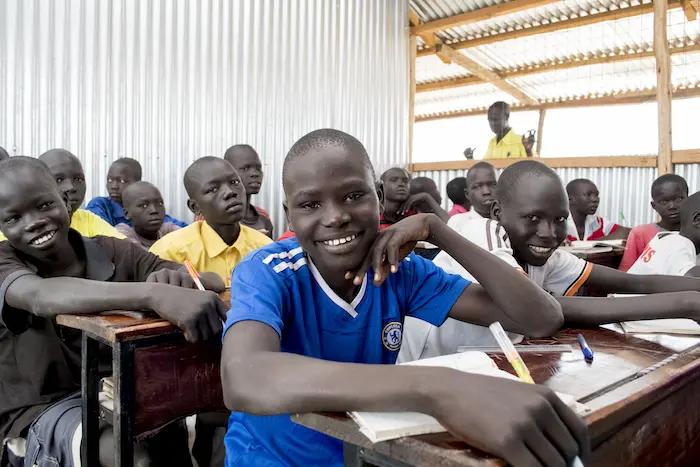
Education, Inclusion & Children’s Futures
How Education Helps Refugees and Vulnerable Children Build Better Futures
Every child deserves the opportunity to learn, grow and develop their abilities in a safe and supportive environment. Yet for children affected by displacement, poverty, insecurity or other difficult circumstances, accessing quality education can be a significant challenge.
Refugee children may have experienced interruptions to schooling, separation from familiar communities, language barriers or uncertainty about their living conditions. Other vulnerable learners may face financial hardship, disability-related barriers, inadequate learning materials or limited access to safe schools.
Education for refugee children is therefore about much more than classroom lessons. It provides opportunities for learning, social connection, personal development and participation in community life.
Education can help children develop literacy, numeracy, communication and practical skills that support their futures. It can also provide structure, positive relationships and opportunities to participate in activities with peers.
However, educational access alone does not guarantee that every child receives the support they need. Some learners require additional language assistance, psychosocial support, accessible facilities or help returning to school after prolonged interruptions.
Families, educators, community organisations and public institutions all have important roles in creating inclusive learning opportunities.
This article explores why education matters for refugee and vulnerable children, the barriers that affect learning and practical approaches that can help children continue their education with dignity and confidence.
What Is Education for Refugee Children?
Education for refugee children refers to learning opportunities available to children who have been forced to leave their countries because of conflict, persecution or other circumstances requiring international protection.
These opportunities may include early childhood education, primary and secondary schooling, accelerated learning, vocational pathways and other recognised educational programmes.
Refugee learners are not a single uniform group. Their educational experiences differ depending on age, previous schooling, language, disability, family circumstances and the conditions of displacement.
Some children may have attended school consistently before displacement. Others may have experienced significant interruptions or may never have had access to formal education.
Important Goals of Inclusive Refugee Education
- Access: Help children enter appropriate learning opportunities.
- Continuity: Reduce interruptions and support progression.
- Quality: Provide meaningful teaching and learning.
- Inclusion: Address language, disability and other barriers.
- Safety: Promote protective learning environments.
- Participation: Encourage children to contribute to school activities.
- Future opportunities: Support recognised educational pathways and further training.
Education is a fundamental right. Children should have meaningful opportunities to learn regardless of displacement status, family income, disability or other circumstances.
1. Why Education Is Essential for Refugee and Vulnerable Children
Education helps children acquire knowledge and develop abilities that support everyday life and future opportunities.
For learners affected by displacement or hardship, schools can also provide familiar routines, opportunities for positive social interaction and connections with trusted adults.
These benefits depend on schools being safe, inclusive and responsive to children’s needs.
How Education Supports Child Development
| Development Area | Potential Educational Benefit |
|---|---|
| Literacy | Supports reading, writing, communication and access to information. |
| Numeracy | Develops mathematical reasoning and everyday problem-solving skills. |
| Social development | Creates opportunities for friendships, cooperation and communication. |
| Personal confidence | Encourages learners to express ideas and explore their abilities. |
| Future learning | Provides a foundation for further education and training. |
| Community participation | Supports teamwork, responsibility and constructive engagement. |
Education should be viewed as an investment in children’s present wellbeing as well as their future opportunities.
2. How Displacement Disrupts Children’s Education
Displacement can interrupt education suddenly. Children may leave behind their schools, teachers, learning materials and established routines.
Families may need to relocate repeatedly or adjust to unfamiliar education systems.
Children can also face uncertainty about language requirements, school placement and recognition of previous learning.
Common Education Challenges During Displacement
- Interrupted attendance and incomplete academic records.
- Limited availability of suitable schools.
- Language differences between learners and teachers.
- Financial difficulties involving transport and school materials.
- Overcrowded classrooms or insufficient teaching resources.
- Psychosocial distress affecting concentration and participation.
- Disability-related barriers and inaccessible facilities.
- Uncertainty about educational progression.
These challenges may affect learners differently. Some children adapt quickly, while others require sustained support.
Why Individual Assessment Matters
Children affected by displacement should not automatically be treated as traumatised or academically behind. Their experiences, strengths and support needs should be understood individually, without assumptions or stigmatising labels.
3. Education Creates Stability and Positive Daily Routines
Children benefit from predictable environments where they know what to expect and can develop positive relationships.
School routines can provide opportunities for structured learning, recreation and interaction with peers.
For children whose living circumstances have changed significantly, these routines may offer a helpful sense of continuity.
However, schools should remain flexible and responsive to learners facing ongoing challenges.
Elements of a Supportive Learning Environment
- Consistent and respectful classroom routines.
- Teachers who respond sensitively to learners’ needs.
- Opportunities for play, creativity and social interaction.
- Clear safeguarding and anti-bullying procedures.
- Supportive communication with parents and caregivers.
- Appropriate referral arrangements for specialised assistance.
- Inclusive participation in school activities.
A supportive school environment recognises that academic achievement and emotional wellbeing are interconnected.
4. The Importance of Psychosocial Support in Education
Some children affected by displacement, insecurity or family hardship may experience stress, grief or other emotional challenges.
These experiences can influence concentration, sleep, social relationships and participation in learning.
Schools can contribute to wellbeing by creating respectful environments and helping learners access appropriate support.
Teachers are important sources of encouragement, but they should not be expected to replace qualified mental health or child protection professionals.
Practical Ways Schools Can Support Wellbeing
- Build respectful relationships between teachers and learners.
- Encourage positive peer interaction.
- Provide safe opportunities for recreation and creative activities.
- Respond appropriately to bullying and discrimination.
- Communicate sensitively with caregivers.
- Recognise signs that a child may need additional support.
- Use appropriate referral pathways for specialised services.
Children need more than academic instruction. Safe relationships, opportunities for play and access to appropriate support can contribute to a learning environment where children feel respected and included.
5. Language Barriers and Learning in Unfamiliar Environments
Refugee children may enter schools where teaching takes place in languages they are still learning.
A child may have strong academic abilities but struggle to demonstrate them because of language differences.
Without suitable support, these challenges may be mistaken for low academic ability.
Strategies for Supporting Multilingual Learners
| Approach | How It Helps |
|---|---|
| Language support | Helps learners develop the language skills needed for classroom participation. |
| Visual learning materials | Supports understanding through illustrations, demonstrations and examples. |
| Peer learning | Creates opportunities for cooperative learning and social connection. |
| Flexible assessment | Helps educators understand existing knowledge without relying only on language proficiency. |
| Family engagement | Supports communication about learning needs and school expectations. |
Language support should respect learners’ existing linguistic knowledge and cultural identities.
6. Inclusive Education for Children With Disabilities
Children with disabilities may face additional barriers when schools lack accessible infrastructure, appropriate learning materials or trained staff.
These challenges can become more complicated during displacement, particularly when children lose access to established support services.
Inclusive education aims to ensure that learners can participate meaningfully regardless of disability or other personal circumstances.
Important Features of Disability-Inclusive Schools
- Accessible classrooms and sanitation facilities.
- Appropriate learning materials and assistive support.
- Teaching approaches responsive to different learning needs.
- Respectful communication with children and caregivers.
- Safe access to school facilities and activities.
- Opportunities to participate in school leadership and recreation.
- Appropriate referrals for specialised assessment and support.
Inclusion should be based on dignity, accessibility and the recognition that children have different strengths and learning needs.
7. Why Girls’ Education Requires Special Attention During Displacement
Girls affected by displacement may face barriers involving household responsibilities, early marriage, safety concerns and inadequate menstrual hygiene facilities.
These challenges can affect attendance and progression through education.
Supporting girls’ education requires safe schools, appropriate sanitation and family engagement.
Important Priorities for Girls’ Educational Participation
- Safe and accessible school environments.
- Private toilets and suitable menstrual hygiene facilities.
- Support for continued attendance and progression.
- Appropriate child protection mechanisms.
- Equal opportunities in classroom and extracurricular activities.
- Respectful engagement with families and communities.
Gender-responsive education should also consider the needs of boys and other learners facing specific vulnerabilities.
These priorities connect with SDC Kenya’s Water, Sanitation and Hygiene Programme, which addresses the importance of safe water and sanitation.
8. School Nutrition, Health and Learning Outcomes
Children need adequate nutrition and appropriate healthcare to support growth, wellbeing and participation in education.
Food insecurity can affect energy levels and concentration, while illness may contribute to school absence.
Children living in vulnerable circumstances may face overlapping challenges involving food access, healthcare and sanitation.
How Health and Nutrition Support Education
| Area | Connection to Learning |
|---|---|
| Adequate nutrition | Supports growth, energy and general wellbeing. |
| Safe drinking water | Supports hydration and reduces exposure to unsafe water. |
| Sanitation | Supports hygiene and disease prevention. |
| Healthcare access | Helps address illnesses and health concerns that may affect attendance. |
| Health education | Supports understanding of preventive health practices. |
Education initiatives can benefit from coordination with appropriate health and nutrition services.
Explore SDC Kenya’s Health Programme and Nutrition Programme to learn about these interconnected development priorities.
9. Accelerated Learning and Returning to School After Interruption
Children who have missed extended periods of education may need additional assistance to return to appropriate learning pathways.
Some learners may be older than the typical age for their current academic level. Others may need support rebuilding foundational literacy and numeracy skills.
Accelerated learning approaches can help eligible learners cover essential content through structured programmes designed for their circumstances.
Such programmes should be appropriately designed, recognised where required and linked to meaningful educational progression.
Supporting a Successful Return to Learning
Understand Previous Learning
Assess the learner’s educational background, existing skills and interests without making assumptions.
Identify an Appropriate Pathway
Consider formal schooling, recognised accelerated learning or other suitable educational options.
Address Practical Barriers
Identify challenges involving transport, materials, language, accessibility and family circumstances.
Provide Learning Support
Offer appropriate assistance with foundational skills and classroom participation.
Monitor Progress
Review attendance, learning outcomes and wellbeing to identify additional support needs.
Reintegration should be supportive and age-appropriate. Learners should not be made to feel ashamed because their education was interrupted.
10. The Role of Parents and Caregivers in Refugee Education
Parents and caregivers play an important role in supporting children’s education, even when families face significant financial or social challenges.
Positive encouragement, communication with teachers and attention to children’s wellbeing can contribute to stronger educational participation.
Practical Ways Families Can Support Learning
- Encourage regular attendance whenever possible.
- Show interest in children’s learning experiences.
- Communicate with teachers about challenges.
- Support age-appropriate learning activities at home.
- Listen to concerns about safety and discrimination.
- Encourage both girls and boys to pursue education.
- Seek appropriate assistance when practical barriers arise.
Support should recognise that caregivers may themselves face difficulties involving employment, language, housing or access to services.
Schools and community organisations can help by creating respectful communication channels and connecting families with available support.
11. How Host Communities Benefit From Inclusive Education
Inclusive education can strengthen relationships between displaced populations and the communities in which they live.
When children from different backgrounds learn together in respectful environments, they gain opportunities to communicate, cooperate and understand one another.
These experiences can support social inclusion and help challenge stereotypes.
Potential Community Benefits
- Improved interaction between children from different backgrounds.
- Greater understanding of cultural and linguistic diversity.
- Opportunities for cooperation and shared learning.
- Stronger participation in community activities.
- Development of skills that can support future livelihoods.
- More inclusive attitudes toward vulnerable groups.
However, inclusive education requires adequate resources and fair planning. Schools serving both host-community and displaced learners need appropriate support to maintain educational quality.
12. How NGOs and Development Partners Can Support Refugee Education
Non-governmental organisations, educational institutions and development partners can help address barriers that prevent refugee and vulnerable children from accessing quality education.
Effective support should be coordinated with relevant education authorities and informed by the experiences of learners, caregivers and teachers.
Interventions should strengthen existing education systems wherever possible rather than creating unnecessary fragmentation.
Important Priorities for Education Support Initiatives
- Assess educational needs: Understand enrolment, attendance and learning barriers.
- Promote inclusion: Consider language, disability, gender and economic vulnerability.
- Support teachers: Strengthen appropriate classroom and safeguarding capacity.
- Improve learning environments: Address safety, sanitation and accessibility.
- Support continuity: Help learners progress through recognised educational pathways.
- Coordinate services: Connect education with relevant health, nutrition and protection support.
- Engage families: Include caregivers in appropriate planning and communication.
- Monitor outcomes: Assess participation, retention and learning progress.
Development partnerships should prioritise children’s rights, dignity and long-term educational opportunities.
Those interested in contributing to community development can explore opportunities to get involved with SDC Kenya.
13. Measuring Progress in Education for Refugee Children
Educational progress should be assessed using more than enrolment figures.
A child may be registered in school but still face barriers that affect attendance, participation or learning outcomes.
Monitoring should consider whether education is accessible, safe, inclusive and meaningful.
| Monitoring Area | Important Question |
|---|---|
| Enrolment | Are children able to enter appropriate learning opportunities? |
| Attendance | Are learners attending consistently? |
| Retention | Are children remaining in education? |
| Learning outcomes | Are learners developing appropriate knowledge and skills? |
| Inclusion | Are language, disability and other barriers being addressed? |
| Safety | Are schools providing appropriate safeguarding mechanisms? |
| Progression | Can learners advance to further education or training? |
| Wellbeing | Do learners have access to supportive environments and appropriate referrals? |
Monitoring should protect children’s privacy and avoid unnecessary collection of sensitive personal information.
Frequently Asked Questions About Education for Refugee Children
Why is education important for refugee children?
Education supports literacy, numeracy, social development and future opportunities. Safe and inclusive schools can also provide routines, positive relationships and opportunities for children to participate in learning and community life.
What challenges do refugee children face in accessing education?
Common challenges include interrupted schooling, language barriers, limited resources, financial difficulties, inaccessible facilities and uncertainty about educational pathways.
How can schools support children affected by displacement?
Schools can provide inclusive teaching, language assistance, safe environments, appropriate learning support and referral pathways for children requiring specialised services.
What is accelerated learning for refugee children?
Accelerated learning refers to structured educational approaches that help eligible learners cover essential content and reconnect with appropriate educational pathways after interruptions.
How does education help vulnerable children build better futures?
Education helps children develop knowledge, communication, problem-solving and practical skills. These abilities can support further education, employment pathways and meaningful community participation.
How can communities support refugee education?
Communities can promote inclusion, support safe learning environments, engage families, challenge discrimination and cooperate with educational institutions and development partners.
Why is inclusive education important for children with disabilities?
Inclusive education helps ensure that children with disabilities can access appropriate learning materials, accessible facilities and meaningful opportunities to participate in school activities.
Conclusion — Education Opens Pathways to Opportunity and Inclusion
Education for refugee children and vulnerable learners is essential for protecting children’s rights and expanding opportunities for their futures.
Displacement, poverty and other difficult circumstances can interrupt schooling and create barriers to meaningful learning.
However, with appropriate support, children can continue developing their knowledge, skills and confidence.
Safe schools, inclusive teaching, language assistance, appropriate psychosocial support and strong family engagement all contribute to educational participation.
Effective education initiatives must also consider the wider conditions affecting children’s lives, including health, nutrition, sanitation and protection.
Communities, public institutions and development organisations share responsibility for ensuring that vulnerable learners are not excluded.
Every child deserves to be recognised for their abilities and potential rather than defined by displacement or hardship.
By strengthening inclusive education, communities can help children build meaningful futures while promoting dignity, equality and social participation.
Help Create More Inclusive Learning Opportunities
Supporting refugee and vulnerable children’s education requires safe learning environments, inclusive teaching and strong community partnerships. To learn more about SDC Kenya’s educational priorities or explore opportunities for collaboration, connect with our team.